
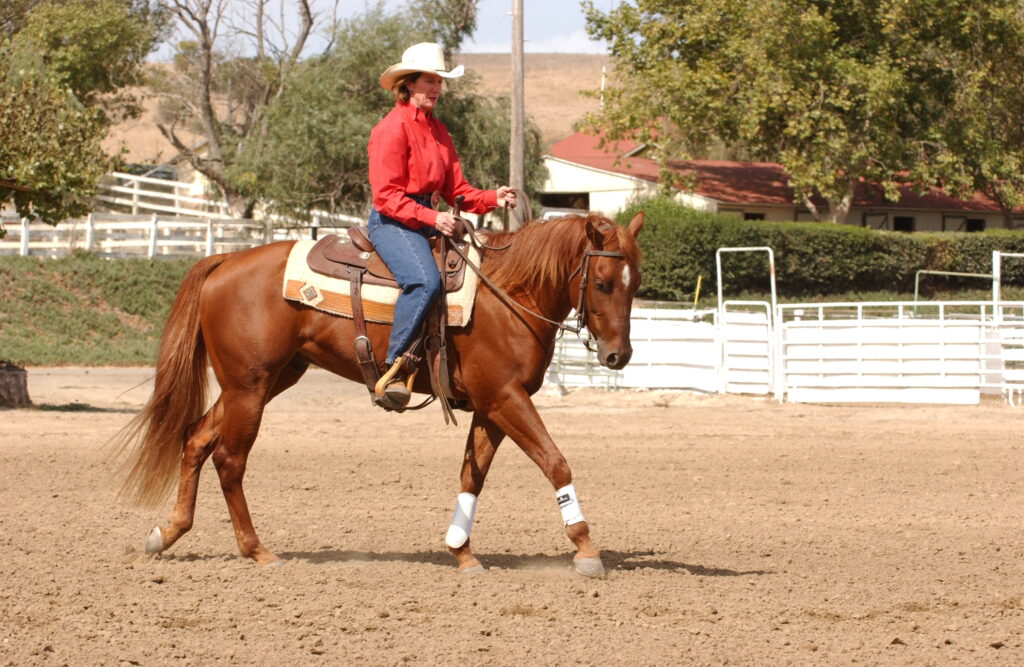
Our horse is a self-reflecting feedback system. It responds to what we are
feeling and who we are being, more than just what we are thinking or doing. Our
horse is always a reflection of our present state: not always instantly, but always
reliably.
A month or so ago, I wrote an article on why softening your horse is important,
then I did one on which side is stiff and which is hollow. Continuing on with that
thread, today my article is a few general rules on how horses learn to get soft
and why and of course how to keep them that way!
It’s a well-known fact that horses learn from the release of pressure not the
application of it. But what does that really mean? Let’s take stopping. If we pull
on the reins, eventually the horse stops. It may be the pulling that gets them
stopped, but it’s the release of that pressure that teaches them to stop. More
important, the release is what makes them want to stop. If we don’t release
when they do stop and allow them to relax and recover, we don’t create the
desire in them to want to it. A horse that wants to stop can then easily be taught
the next lesson… how we want them to stop.
If on the other hand there is no release, then a horse gets resistant and
defensive. It hurts and they don’t see a way to please us. When that horse hears
you say “whoa” he braces for the immediate and continuous discomfort instead
of knowing that as soon as he stops, the pressure will immediately cease, and he
can relax and even get a pat and a rest.
With no release, they either give up, get hard mouthed, try to anticipate
maneuvers, brace or get hollow and stiff. But when the release is immediate,
they learn to crave and offer it. This principle goes across everything we do with
our horse. They don’t learn to move away from your leg because you’re kicking
them with it, but rather when they do move away, you release your leg.
As your timing gets better, you’ll find yourself releasing when you first feel them
think to stop. That’s why some people can get results from a horse more quickly
than others. And with consistency, feel and the release principle, you will feel
your horse getting softer. All “softer” means is that your horse is more
responsive (not to be confused with reactive) to very subtle cues and stays
relaxed through his body, yielding willingly to the riders almost imperceptible
movements.
We keep them soft by always staying present and in tune with what we’re
asking, how we’re asking for it, and how it’s being responded to. Always starting
with the softest request and incrementally increasing it until we feel the
response, followed by an immediate release. If we go past their correct response
with increasing force, things go the other way and our horses start getting dull,
heavy and unresponsive. Soon, it takes a mighty pull to cease motion instead of a
small deepening shift in our seat with a soft feel of the reins.
Gerald O’Brien, an Aussie liberty trainer, once told me first you have to get a
horse to willingly comply with your request (ie crave doing that maneuver). Only
then can you show him how you want it done. When they consistently offer that,
then you get to increase the speed. That might be some of the wisest words I’ve heard.
OnsetMaster Resource
OnsetMaster Resource
otitis media ent guide
otitis media ent guide
augmentin clinical introduction
augmentin clinical introduction
orlistat common side effects
orlistat common side effects
online safety safe behavior
online safety safe behavior
vardenafil warning reference
vardenafil warning reference
vardenafil negative effects
vardenafil negative effects
avanafil penile tissue mechanism
avanafil penile tissue mechanism
sildenafil country of origin pricing
sildenafil country of origin pricing
minoxidil moa
minoxidil moa
minoxidil user concerns
minoxidil user concerns
ivermectin safety profile
ivermectin safety profile
ivermectin treatment FAQ
ivermectin treatment FAQ
ketoconazole for fungal infections
ketoconazole for fungal infections
cialis medication guide
cialis medication guide
wegovy semaglutida o que é
wegovy semaglutida o que é
sémaglutide oral rybelsus
sémaglutide oral rybelsus
clozaril
clozaril
lasix for dogs
lasix for dogs
allopurinol 300 mg tablet price
allopurinol 300 mg tablet price
prescription antibiotics
prescription antibiotics
dutasteride prescription online
dutasteride prescription online
remeron 7.5mg pill
remeron 7.5mg pill
finasteride tablet
finasteride tablet
Thank you for offering such practical guidance.
I’ve read similar posts, but yours stood out for its clarity.
Thanks for making this so reader-friendly.
I enjoyed your take on this subject. Keep writing!
I love how clearly you explained everything. Thanks for this.
I’ve bookmarked this post for future reference. Thanks again!
I wish I had read this sooner!
This is now one of my favorite blog posts on this subject.
Your writing always inspires me to learn more.
This content is really helpful, especially for beginners like me.
You’ve done a great job with this. I ended up learning something new without even realizing it—very smooth writing!
This content is gold. Thank you so much!
This content is really helpful, especially for beginners like me.
I enjoyed your take on this subject. Keep writing!
Nicely put! Thank you!