Reining Essential 4 – Backing (green horse)

Reining Essential 4 – Backing (green horse)

Backing up is important because it’s not only a maneuver in itself but also the correction for a poor stop. 

At this point, however, backing doesn’t mean the same as it will later on (when we’ll want it super-straight, very fast, and in response to few visible cues).

For now, we just want to introduce the concept clearly, calmly, and patiently. The worst thing you can do at this point is to try to go faster and sacrifice correctness and softness.

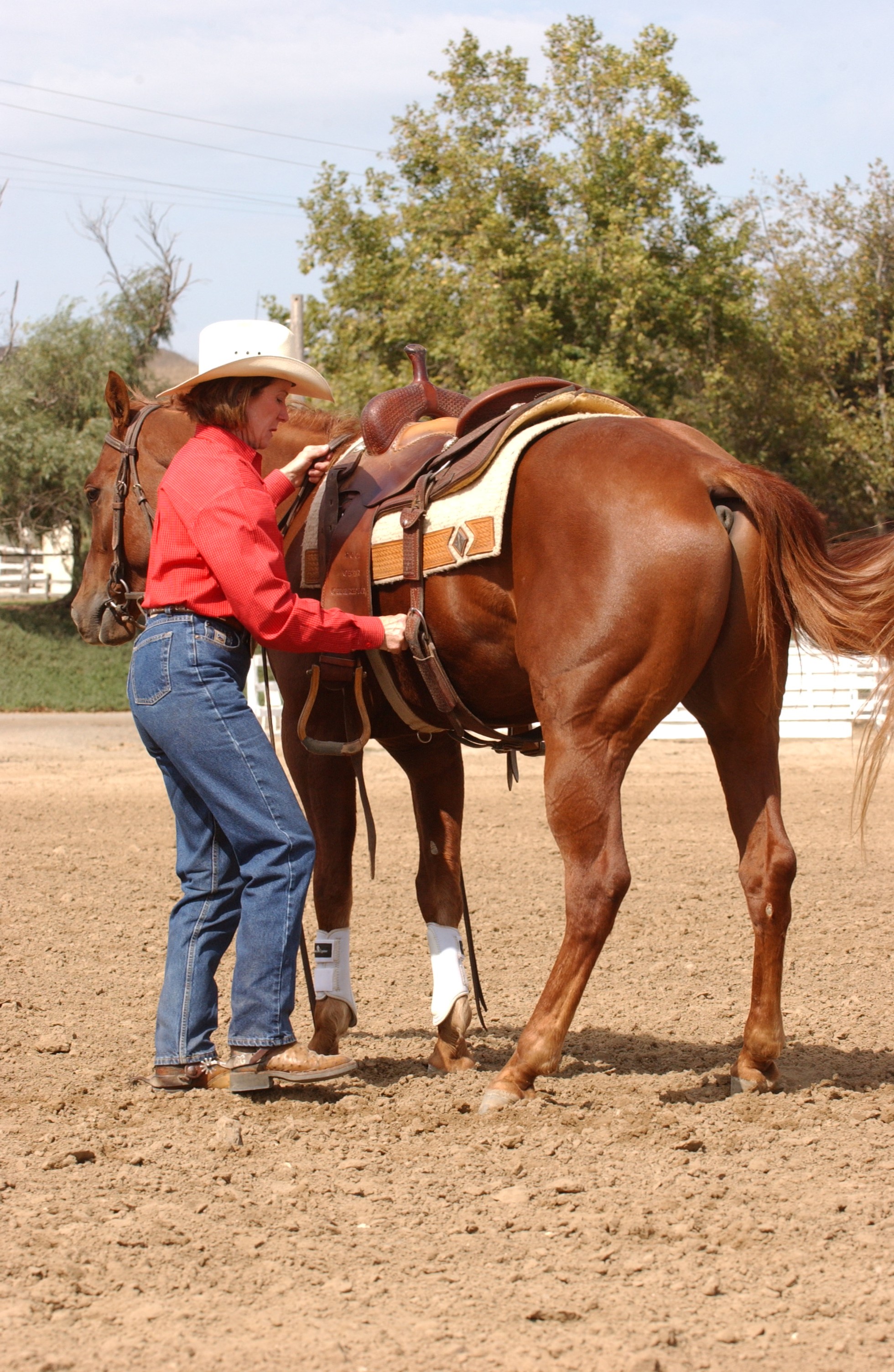
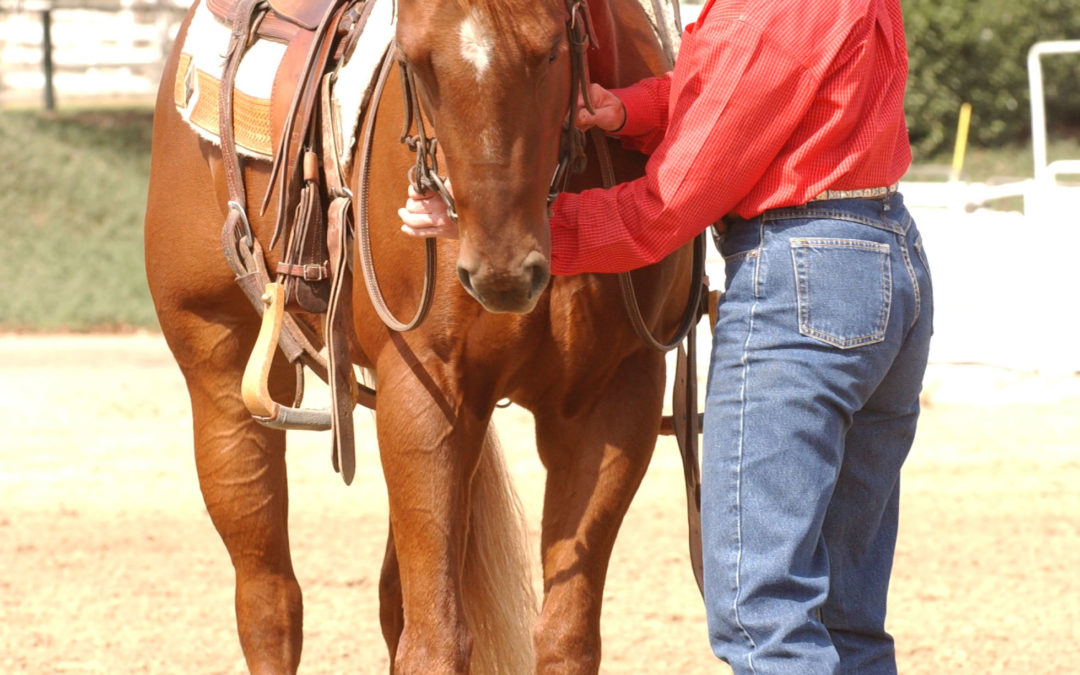
Because so many of you are working with green horses, I want to go over how I start one backing from the ground.

The goal. Your horse will maintain a soft face (that is, no bracing against the bit) as he takes a few willing steps backward, reasonably straight. 

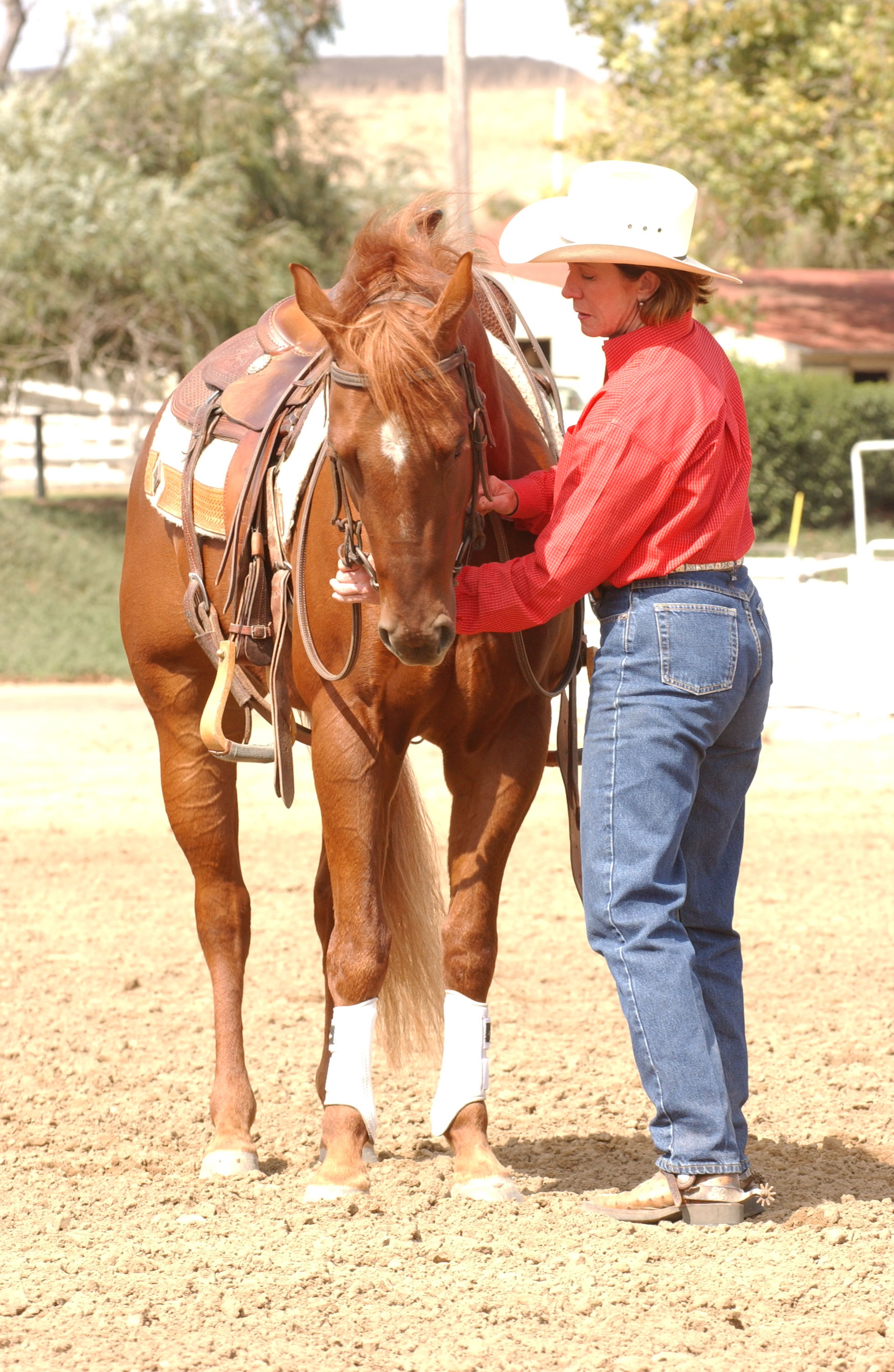
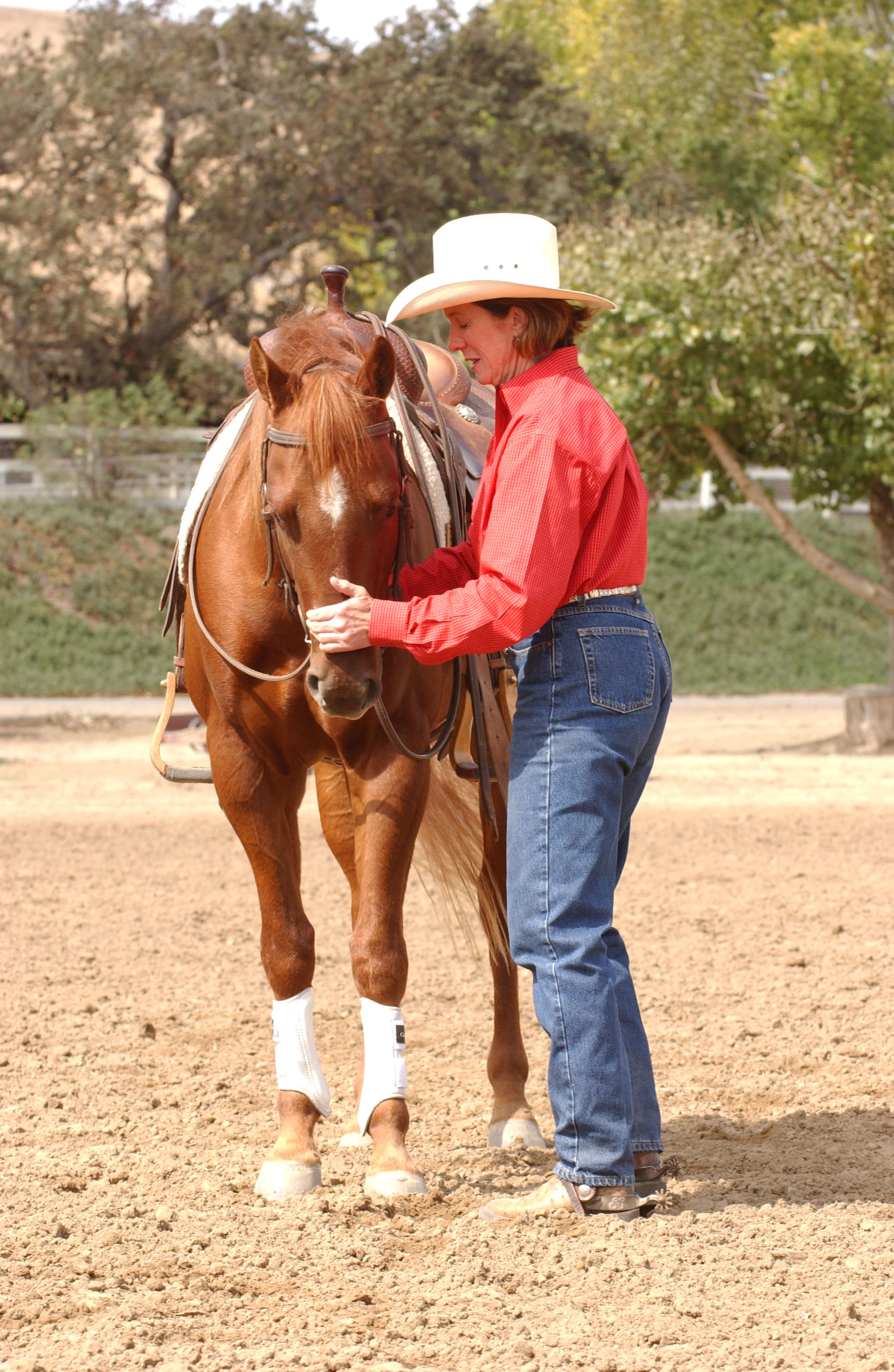
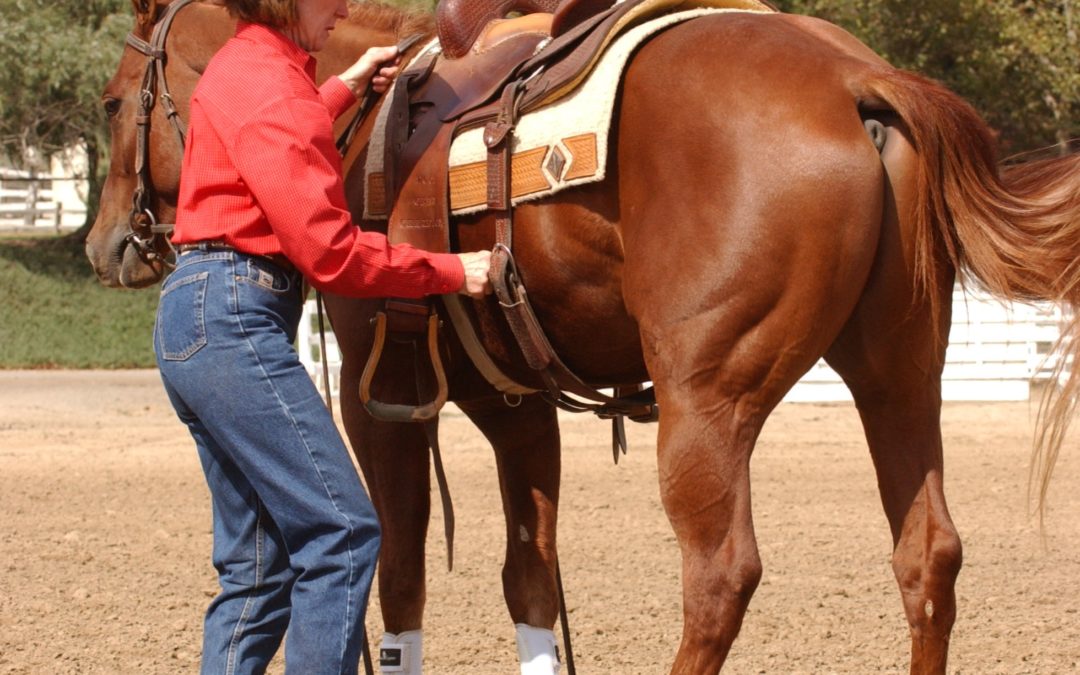
Here’s how: from the ground. With your horse in a snaffle bit and saddle, stand facing him, just off to one side so you’re not directly in front. Grasp a rein just behind the bit with each hand, and apply gentle backward pressure as you did to ask him to bring his nose back and down in the face-softening exercise. If necessary, slide the bit gently from side to side while maintaining soft pressure on both reins. 

When he responds by dropping his nose down and back, don’t release the pressure as you did for face softening. Instead, maintain a gentle, intermittent pressure and cluck. If he hesitates, be patient. It’s better to wait him out (he’ll give in eventually) than to start applying more and more pressure. Most horses are willing to do this for us if we’re patient and ask for just a step or two at a time in the beginning. If he still won’t step back, apply pressure over his lower face (where the hackamore would rest)to encourage him to unstick his feet.

The moment he takes a single backward step, release all pressure and praise him with hands and voice. Remember, that a horse learns from the release of pressure, not the application of it. Then repeat, over time asking for two backward steps, then three.

At this point, don’t worry about whether he’s perfectly straight as he backs. You’re just looking for willing compliance. (Remember that a key concept of setting your horse up to succeed is by showing him until he understands and accepts, and only then training him how you want him to do it—in this case, to back up straight–and only then asking for speed. It’s especially important here.)

LET US KNOW YOUR THOUGHTS 

Riding Smart 5-7

Riding Smart 5-7

In an earlier article I shared 4 tips for Riding Smarter Not Harder. Now here’s 3 more!

  • Be a contrarian. This goes along with training every moment. If your horse is wanting to do one thing, make him do the opposite. Is he leaning in one direction? Make him go the opposite way. Is he amped up and wanting to lope? Make him stand still for a moment. Does he want to stand? Make him lope. Is he eager to be at the front of the line? Put him in the back. Don’t let him train you, either. If he’s a spook, don’t forsake trail rides—go on lots of them and get him exposed to all those frightening things. Don’t make excuses for him. By being a contrarian instead, and insisting he do what you want rather than what he wants, you’re continuously reinforcing that you are the boss, not he. Horses crave leadership, and if you don’t provide it, they will.
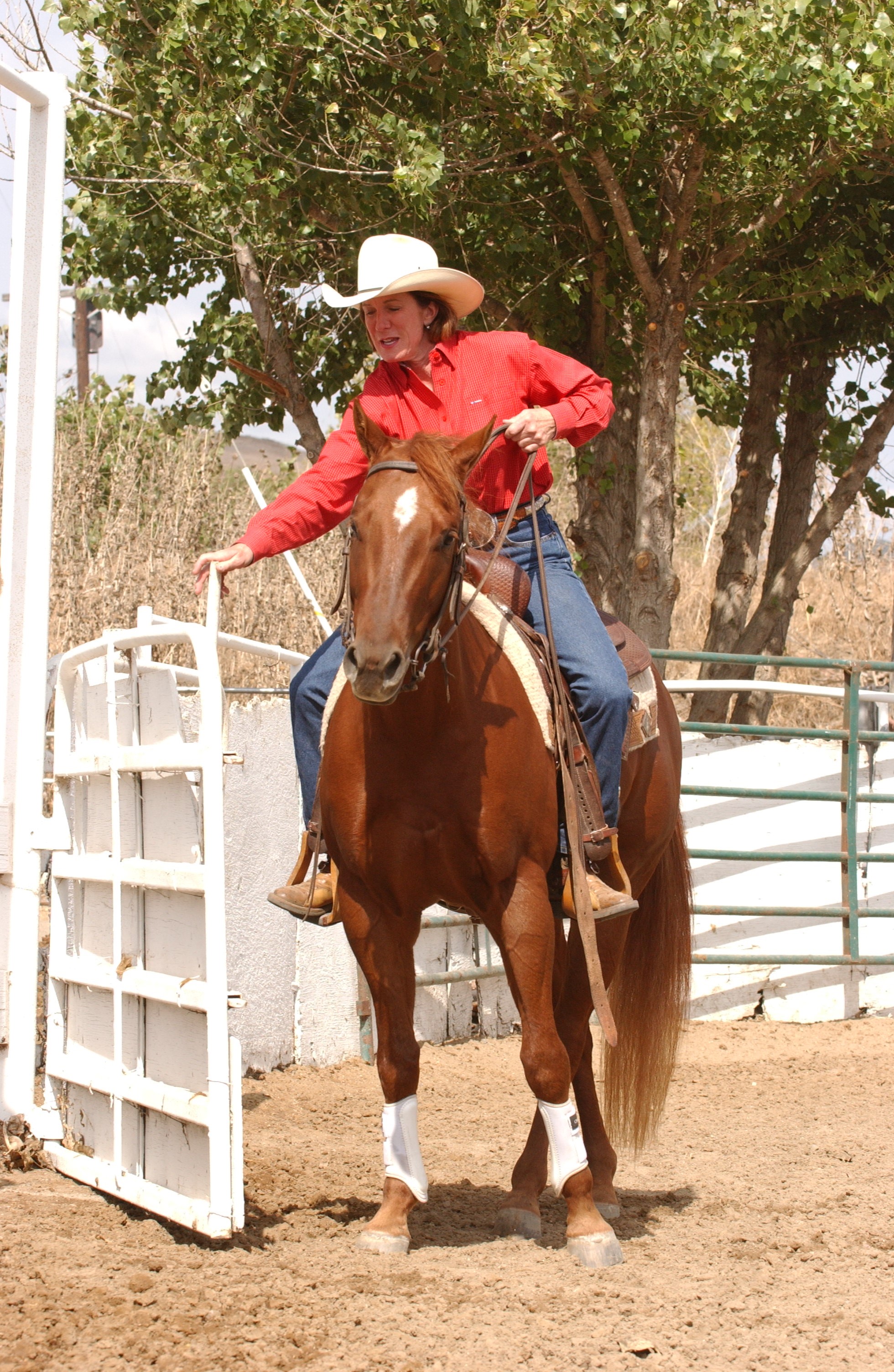
  • Train both sides. Whether you know it or not, you own two horses, a right horse and a left horse, and they both need to be trained (thank goodness they both don’t have to be fed too!). Never assume something you’ve taught your horse to do using one side of his body will translate to the other; it won’t. You must train both sides individually. If he can shut a gate working off your left leg, also teach him to do it off your right. Each side will likely require slightly different approaches because most horses are a little stiff (resistant to bending) to the left and hollow (bend excessively) to the right.
  • Ultimately, you’ll spend about the same amount of time working your horse to each side, striving to make his stiff side more flexible, and his hollow side a little straighter.

  • Be precise. A horse’s brain is like your website browser. If you enter a command that’s just one letter off, the computer won’t recognize it, and you’ll end up at a completely different website. Similarly, if you want optimal performance from your horse, you must ask for a movement exactly the same way each time. Sometimes we get frustrated with a horse that’s not responding correctly. We think, “You dummy—you did it fine yesterday.” But our horse is thinking, “Yes, but I’m confused now, because I don’t recognize this cue….” A fully trained horse is often able to fill in for a miscue, but while he’s still learning, the more precise and correct you can be, the faster and more reliably he’ll learn. Good stuff in, good stuff out.

True story: A fellow came out to my place to try a seasoned, successful show horse, the kind that takes good care of his rider. The guy’s comment after riding him was that it was like playing pool on a table with huge pockets that just funnel the ball in. When a horse is well broke, you should be able to kind of “aim him” at the maneuver, and the ball should go in the hole, so to speak. But until a horse is very solid, you must be very precise.


LET US KNOW YOUR THOUGHTS 

Boxing Pitfalls to Avoid

Boxing Pitfalls to Avoid

I really don’t like to dwell on the negative aspects of a run, that’s why I started the previous segment on boxing with the ways to improve your score. However, the score card has many more ways to lose points than to gain them, so let’s spend some time on things we can avoid, so we score better.

Marking a 70 isn’t just staying out of the penalty box, but that’s a really good start.

There is a 1 point penalty every time you lose working advantage of the cow or are out of position. That can be a miss (the cow zigs and you zag), a quick move by the cow that causes significant distance between you and the cow, or even working the cow cockeyed (technically called out of position). Meaning you’re way past it on one side, and you don’t get to the other side and get “evened up”. The bummer is, that if you lose working advantage once or twice, the one point penalties are in effect, AND your “position and control” score is going to suffer too, so it’s a double whammy.

When you lose a cow down the fence for a 3 point penalty, it’s almost always accompanied by a 1 pt loss of working advantage. How else would a cow escape down the fence, if you didn’t lose working advantage? And, to add insult to injury, if the cow gets away not only do you have those 2 penalties, but your “position and control” box suffer, and “time worked” and maybe “courage” are going down too!

The 5 point penalty of spurring or hitting in front of the cinch are always under our control. But not so, blatant disobedience. Sometimes, horses will be horses, and pull a nasty on us. In my humble opinion, if that happens, I would opt to school my horse within the limits of good horsemanship/showmanship, take my zero, and hope that doesn’t happen again.

Other ways to score below 70, aren’t always penalties, but run content. The judge considers that you are below par, in any (or all of the run content boxes). That will affect your score negatively.

I think the best strategy for beginning boxers is to stay out of the penalty box (just like reining). Then, strive to get a check in the 5 run content boxes (position/control, degree of difficulty, eye appeal, courage and time worked). In my next boxing article, I will go over how your run content in those boxes is linked together like I did with building a credit earning run previously.

When you can mark a 70 fairly consistently, then try to start to up your game. Watch the open riders box (before they go down the fence). Study the people in your class who consistently mark well. How do they approach the cow? How close do they get? How does their horse move with it? What do they do with their hands and legs? Study your videos with someone who has a trained eye. Get input from your trainer what to focus on each week, or between shows. And, most important, learn the mental skills, so that you can take more control over your mind, and put the adrenaline and self-sabotaging thoughts out of your head permanently! And so, for those last reasons, I’m not including any pictures of sub-par boxing runs!!

LET US KNOW YOUR THOUGHTS 

Troubleshooting the Counter Arc Circle – Reining  Essential #3

Troubleshooting the Counter Arc Circle – Reining Essential #3

In this article on reining, I’ll be addressing troubleshooting problems with Reining Essential 3, the counter arc circle and how to deal with them.


Troubleshooting the counter arc circle: Your horse’s response will be affected by his natural asymmetry (his stiff and hollow sides), as well as by whatever magnets are drawing his attention at any moment. As when riding a regular circle, use the key-in-ignition movement to correct a collapsing circle with your inside leg at the cinch, and your outside leg at or behind the neutral position, as need be to adjust the position of his hindquarters.

Be sure to keep your counter arc circle symmetric and round. If it becomes like a cigar in shape, know that your horse has a strong magnet probably on the part of the cigar that’s furthest from the barn/gate drawing him back to it. And, when you’re closest to the barn/gate, it’s probably hard to move him smoothly on the circle, away from the barn. The challenge is to smooth and round the circle out.

The parts of your horse that aren’t working correctly are his shoulders and his hip. The hip is usually worse and isn’t moving off your outside leg. So, when you go from circular to cigar, slow it all down and make his hip move off your leg in an exaggerated side-pass to over-correct. Then, move back onto your circle track. You’ll know you are losing control if you find you’re cranking his head too much to the outside. It’s our natural reaction to counteract them not moving off our leg, so just a little bend of his head and neck to the outside, accompanied by an aggressive outside leg.

Be patient and keep working on symmetrical circles and counter arc circles, and you’ll be surprised at how much control you’ll gain over all of your horse’s body whole body and mind!

LET US KNOW YOUR THOUGHTS 

5 Boxing Ways to Improve Your Score

5 Boxing Ways to Improve Your Score

There are only 5 credit boxes for the Limited Cow class. They are all connected to each other. By that, I mean, that if you are crediting one box, you’re probably gaining credit in at least one other box. And likewise, if you are losing credit in 1, you’re probably in the negative in at least one other. Let me explain, by starting with what makes a really good run.

When a rider walks confidently into the arena, nods for the cow, steps right up to challenge it, and crisply moves right and left with the cow, many good things are happening! When I’m judging that class, and see a run start like that, the thoughts going through my head in those first 15 seconds are….”this is probably going to be a good run”. My “thermometer” is going up. I’m thinking that the rider is starting to show courage, utilizing their time (time worked), getting to the right spot (position and control). So already, I’m wanting to be in the positive (71 range) in at least 3 credit areas.

My next thoughts are, can they maintain these credits? Will they put more pressure on the cow, and be able to control it? If they do, the score for position and control, courage and maybe even time worked can all go up together. If the cow is challenging, then degree of difficulty goes up too. That’s how to mark above a 72.

Now, if the degree of difficulty is there (the cow is challenging), position and control are very good, the rider keeps the pressure on (courage and time worked go up) and looks good doing it (ie smooth, athletic, riders hands are quiet), then we’re getting into the 73 and above range.

When the buzzer sounds, my next question is how good was that? Exactly how difficult was the cow? What really stood out that I can give a full plus to? Usually if there’s one thing that was very good, there are other things that were too.

This is what a skillful exhibitor learns, and can use to start to increase their score.

Conversely, if the rider hangs back, doesn’t move crisply left and right, they will not only go down in courage, but probably also time worked, and position and control. If a horse isn’t moving with the intention of holding the cow (because the rider isn’t insisting on it), eye appeal will suffer too. All of the categories are headed down, and suddenly a 68- run is what’s happening.

As you gain experience showing, try to “connect the boxes”. If you’re controlling the cow by getting to it’s head and keeping it in the middle 2/3rd’s of the arena, and if your horse moves fluidly, because you’re using your feet more than your hands, and you’re advancing and keeping enough pressure on the cow to show your horse off, and you can maintain that level of performance throughout your time, you’re probably going to be at least a 72. The degree of difficulty of the cow is something you can’t control, so to have a really good run, that element has to be there too. But, my point is, and the good news is, that a lot of this is within your control! So, get with your trainer so you can work towards increasing your score in each area, because they can all go up together!!

LET US KNOW YOUR THOUGHTS