Reining Essential 5 – Whoa

Reining Essential 5 – Whoa

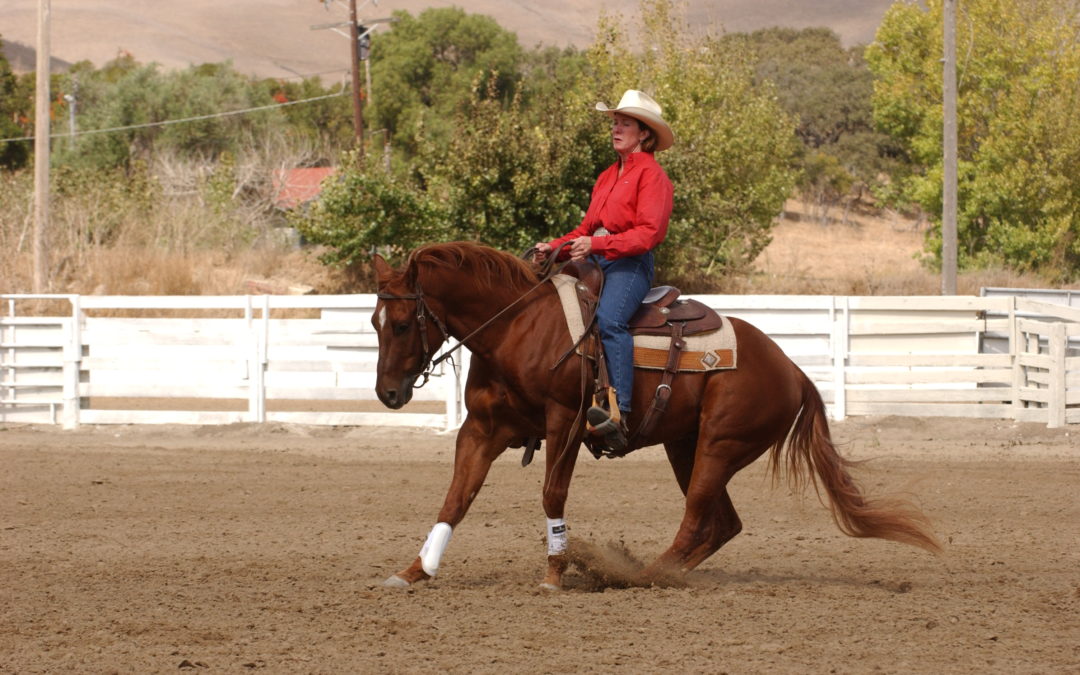
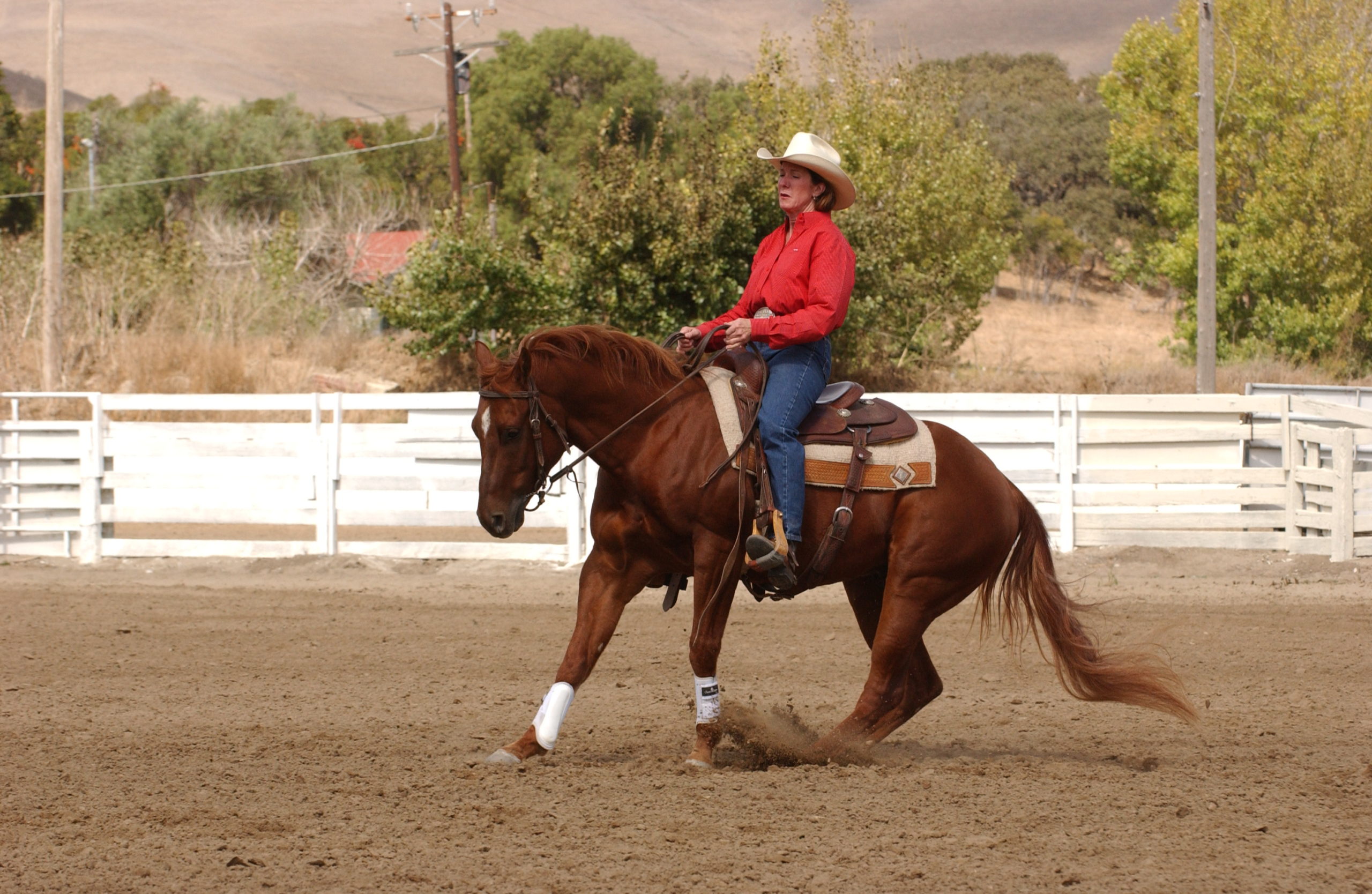
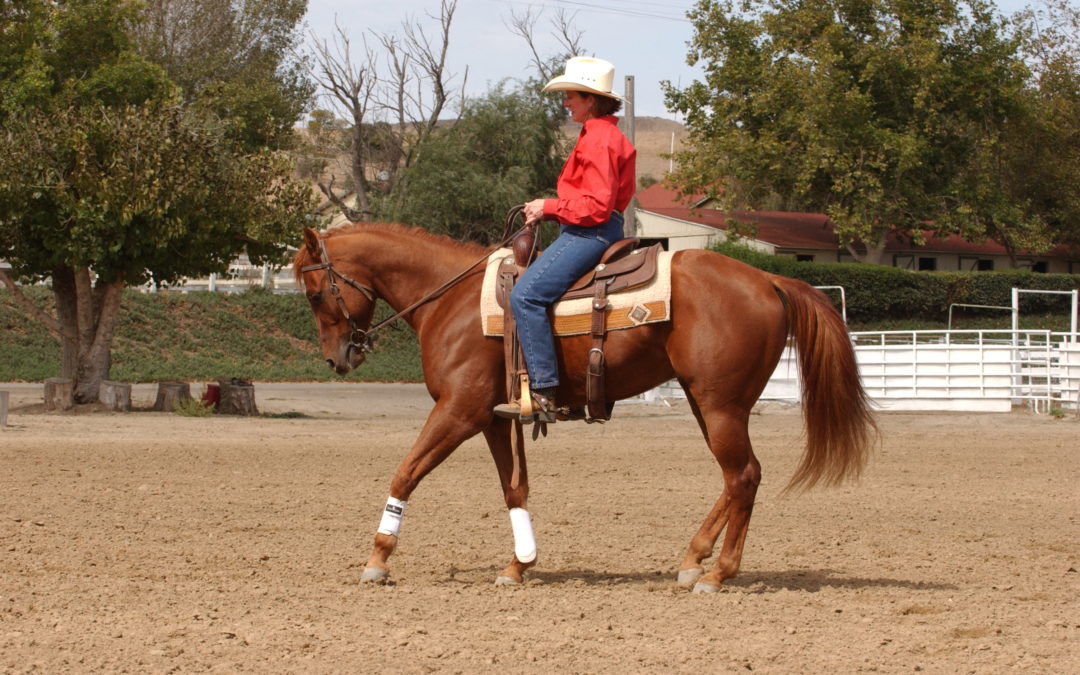
Your horse’s willingness to stop when you say “whoa” is essential for control and basic training. It also provides the foundation for one of reining’s most thrilling maneuvers, the sliding stop. But first, we’ll have to be satisfied by an attempt from our horse, at ceasing forward motion. It’s not going to look anything like the stop we’ll need in competition, where the horse is balanced, off the bit, driving from behind with his back round and his head low, gliding into the dirt (I get goosebumps just thinking about it!)

But all things in good time. The key thing now is to get your horse to love and even crave stopping. That means don’t make it uncomfortable for him. Make it as easy as possible for him. Set him up for success by making sure he’s a little tired and wanting to stop, then aim him toward a wall or a corner, if need be, so he has a visual barrier. This is much preferable to trying to force him to stop by overpulling on the reins, which he doesn’t understand yet anyway. Then exhale, sit down and say “whoa,” get stopped, then praise him, and let him sit for a while. Enjoy the scenery!


I
f you do it right, you’ll be surprised how quickly your horse will learn to stop when he hears whoa. In fact, he may start to stop when he feels you begin to exhale. 


True story: One non-pro I coached had to take a lot of cell phone calls while he was riding. Whenever his phone rang, he’d stop and answer, sitting and talking for a while. Well, it didn’t take long before his horse started doing these really nice stops at the first ring! Horses remember the very last thing they were doing before the reward. This horse knew the ring meant there was a nice sit-a-spell coming right after his stop, so stop he did!


The goal.
 When you sit deep, exhale, and say whoa, your horse will come to a comfortable stop on his rear end, then back a step, all preferably without your having to pull on the reins (although you probably will need to pull in the beginning, until he understands). 


Here’s how. 
Prepare to make stopping your horse’s idea (remember: make the right thing easy!) by loping him until he’s a bit tired and thinking about wanting to stop. As you lope, work on getting him soft in the face by using both your legs in neutral position to drive him into your hands. Work on circles, asking him to bend by using pressure or bumping from your inside leg in neutral position. Get him all softened up.


When he’s ready to volunteer to slow down (you’ll know because you’ll have to keep pushing to keep him loping), ride him onto a straight line toward your arena wall or a corner. You’re going to ask for the stop when you’re about three or four strides from the wall or corner, so give yourself enough space to be able to straighten him out before you get to that point.


Don’t worry about exactly where his feet are (from all those books you’ve read); if you exhale, then say whoa, you’ll be asking in the right part of his stride to make it work.


So, when you’re about three or four strides from the wall or corner, just when he’s starting to wonder which way you’re going to go, take a long breath, exhale as you sit deep in the saddle, and at the end of the exhalation, say whoa in a low, smooth, authoritative voice. (If your voice is tentative, abrupt, or too drawn-out, it will be less effective in commanding attention and getting a response.)


As you finish saying whoa, count “one, and, two” to yourself, and if he hasn’t stopped by then, pick up the reins and, using the least amount of pressure that’s effective, get him stopped. Then back him up a step, then relax and praise him as you let him stand and rest a bit.


Keep in mind that it’s OK to pull on him a little to get him stopped, as long as you always give him a chance to stop before you pull. If you pull at the same time as you say whoa, he’ll never learn to stop just from your voice. (Plus, it can cause him to stop abruptly and in the wrong part of his stride, “dashboarding” you, his driver.)


Also, be sure to give him a long enough break after the stop so that he knows he’s being rewarded. Watch to see that he relaxes (drops his head, exhales) and licks his lips—a sign that he’s “processing” and is OK with this new information he’s just gotten.


Above all, don’t let your horse subtly call the shots on where to stop. In other words, don’t avoid stopping in places where he doesn’t want to (like when you’re loping towards the barn). Also, don’t let him “volunteer” to stop at his preferred spots, such as by the out gate or near other horses. Insist that he do so at the places you’ve chosen.


Otherwise, you’re letting him train you. And that’s never a good idea!


LET US KNOW YOUR THOUGHTS 

Riding Smart 8-10

Riding Smart 8-10

In previous articles, I’ve shared 7 tips for Riding Smarter Not Harder. Now, here’s 3 more!

• Develop great timing.

Remember — horses learn from the release of pressure, not the application of it.

When you release pressure (either from your legs or reins), your horse will associate that reward with whatever he was doing immediately before the release.

So, if you’re a split second late releasing, you’re slowing his learning, or even inadvertently “rewarding” something else entirely.

If you’re asking for a step backward, the instant he even begins to think “back,” you should soften the reins for an instant as a reward, then resume asking. But if you miss that moment, and instead lighten as he’s raising his head or opening his mouth, you’re rewarding him for what you don’t want.

Timing is everything.

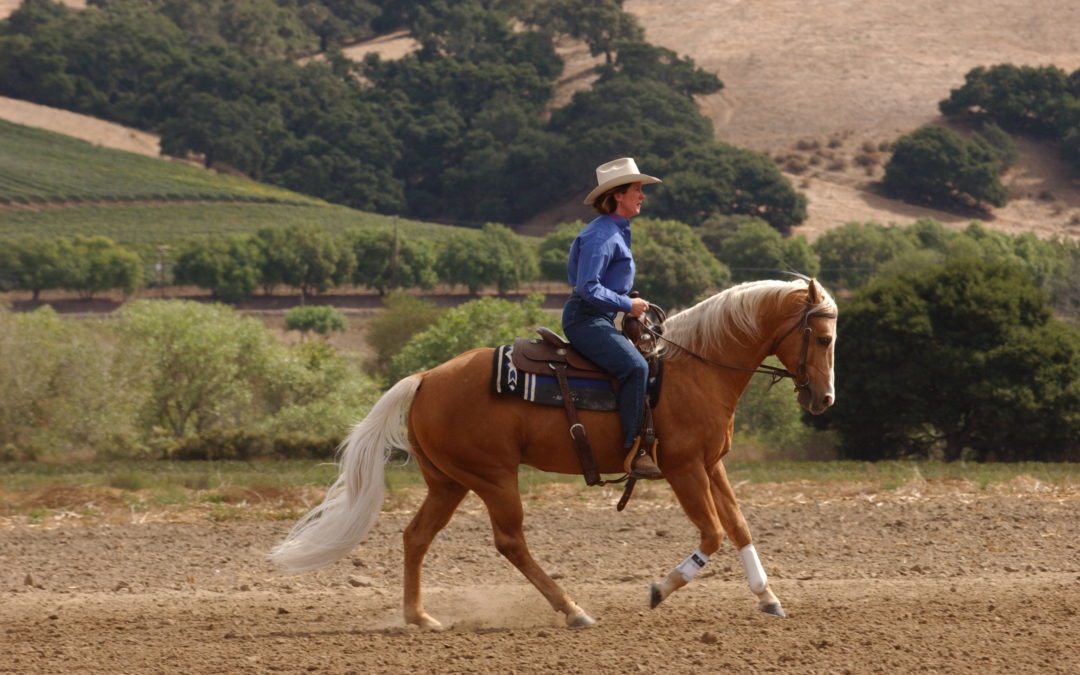
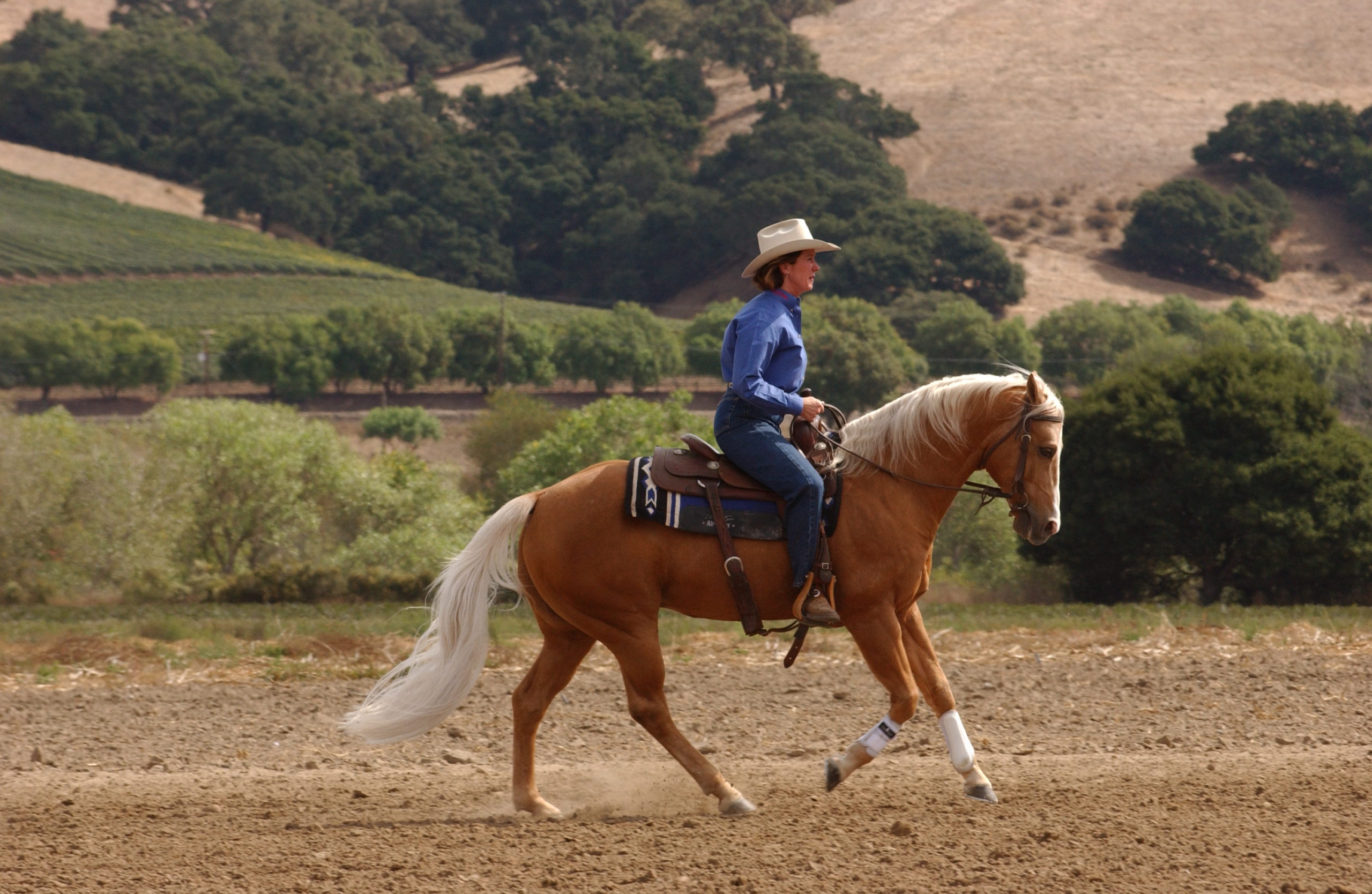
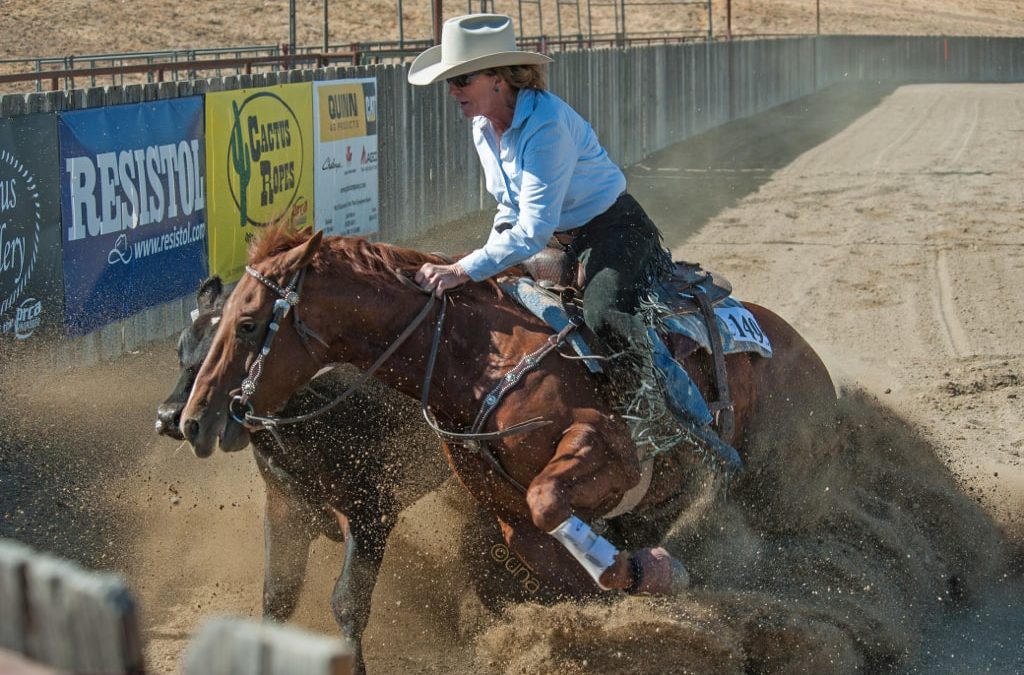
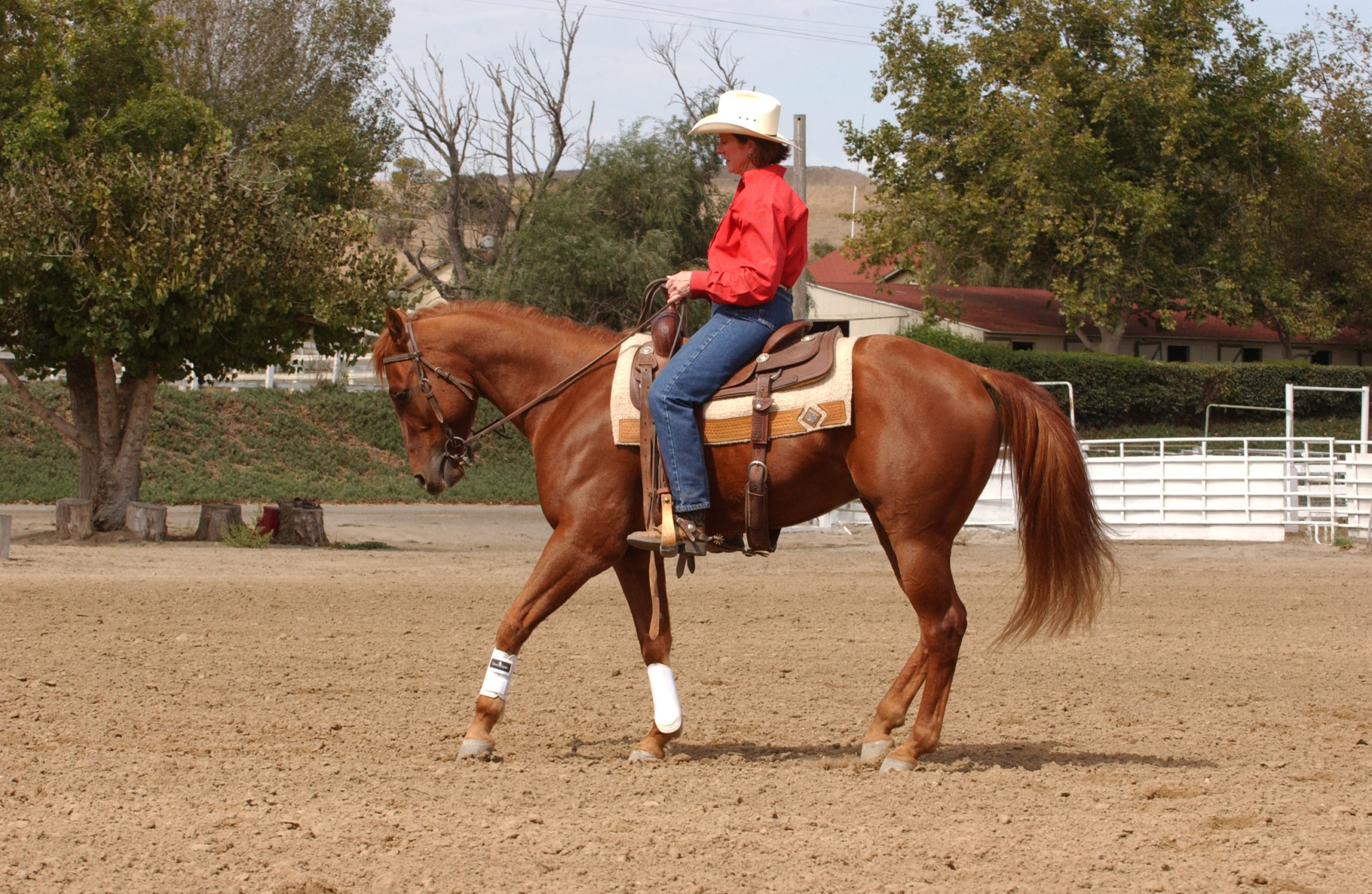
Now is a perfect time to release, if I want to teach my horse to lope softly framed up.

(See photo on left)

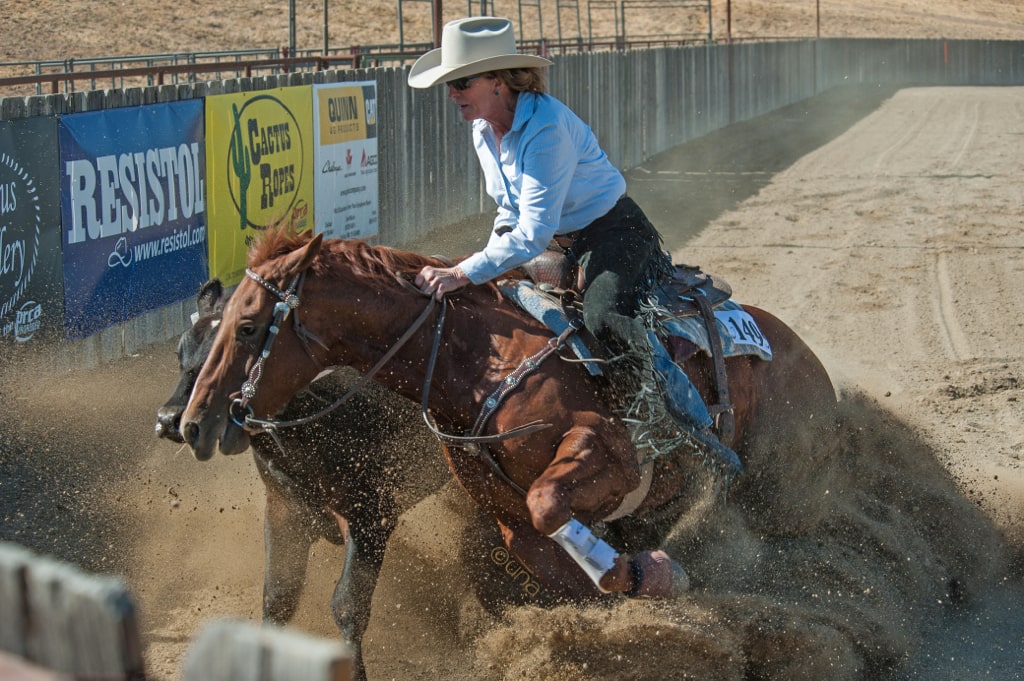
Not when he’s loping like in this.


(See photo on right)

• Be consistent and fair.

A cue can’t mean one thing half the time, and something different the other half – because you don’t enforce it.

If you’re inconsistent in your follow-through, you oblige your horse to choose whether you really “mean” it each time you ask. That gives him only a fifty-fifty chance of doing the right thing.

Inevitably, he’ll choose the easier, and in most cases, wrong thing and get himself in trouble. This inconsistency on your part is like lying to your horse. You must be honest to gain his trust and respect.

Similarly, you must never lose your temper. When you do need to make a correction, it must always fit the infraction, and never be done with anger or impatience.

Never suspect that your horse is trying to be bad on purpose—he isn’t. You probably confused him, so take that into consideration in your response. A scared and intimidated horse isn’t going to try for you. But if he understands that you’ll always be fair with him, he’ll get confident enough to give his all.

That said, don’t hesitate to “raise your voice” if that’s what’s needed.

• Solve—don’t create—problems.

Any time your horse doesn’t respond the way you want, don’t compound the problem (or create a new one) by taking a hasty or overly aggressive approach.

Let’s say, for example, your horse is getting racy instead of staying in the steady lope that you’ve asked for. You really feel he should be “getting it” by now, but instead of losing your cool, you simply take all slack out of the reins, then draw him to a trot, then a walk, then a stop, then a back-up—all in about six or so strides. Then you sit for a while, give him a chance to relax, then you try that lope again.

If, instead, you jerk him into the ground, scaring him, then the next time he’s going fast, he’ll start worrying about getting jerked, and the problem will have been compounded.

In other words, when you do it the correct way, he thinks, “Oops, I’m racing along here…now she’s picking up the reins to break me down…I guess I’ll give her my face and come to her, because I know she’ll insist on that, but then at least I get to stop and rest.”

But the other way, he thinks, “Oh no!!, she’s picking up the reins and she’s going to rip me a new set of lips…better brace my jaw and get my head up to protect myself.” See how that works?

All of these tips are really common sense ideas, but sometimes we don’t take the time to think through what our actions are really telling our horse, and sometimes it’s just a matter of explaining it to him differently. Deal with your horse like you would deal with a 5 year old child.

LET US KNOW YOUR THOUGHTS 

Fence Work Credit Part B – Run Content Credit and Debit

Fence Work Credit Part B – Run Content Credit and Debit

In my last fencework article, I went over boxing, rate and form and quality of your turns. In this article, I’ll continue with the run content boxes of position and control, degree of difficulty and eye appeal.

Position and Control

I think most judges would agree that this is the most important element of the fence work. We can all forgive a little loss of eye appeal, or some other minor toe stub, if you maintain excellent position and control. That means there is never any significant separation between the horse and the cow. In other words, you could rope the cow easily at any time during the run. In this high-speed event, control is crucial, so no one gets hurt. What it really means is every second, you’re dictating to the cow, where it’s going to go and where you’re going to turn it. And, you have total control of your horse, and are able to maintain position on the cow to execute this. Anytime there is “separation” from the cow (ie distance), it should be reflected negatively in this box. If it is a full-fledged “loss of working advantage”, the penalty (an “A” 1 point loss of working advantage) will go in the box above the part of the run where it occurred. Or, if it is a general lack of control, you might have a minus in the position and control box. 

Degree of Difficulty

Degree of difficulty can refer to the cow’s extreme speed, or recalcitrance. If your cow isn’t a challenging one, it’s impossible to have a stratospheric run. The general rule for a new cow is “can the rider mark at least a 70 on the beast?” But, no matter how difficult your cow is, you won’t receive any credit if you don’t get the job done. And likewise, the more difficult, and the better you do, the more credit you will receive in that box.

Eye Appeal

The “eye appeal” box is used for negative marks to take a rude horse’s score down and show why. On a really good run, it can be the box used to get it up to a great score.  Everything else being equal, the horse who goes wherever he’s pointed, with no resistance (mouth shut, head where it belongs), and handles a cow with a high degree of difficulty, will always be the winner. He will look the best, while appearing to do the least, and make it look effortless to control the most challenging bovines. He’ll give you goosebumps, and make you wish you could steal a ride on him!

Any of these boxes can be ++ or = (double plussed or double minused). If I find myself saying “OMG, how could that horse go any faster and exhibit any more control”, I might be thinking ++ on position and control or degree of difficulty. Likewise, if a horse spits the bit several times, I’m probably going to be a = the eye appeal box.

Circling

Every horse circles one way better than the other. If you have the choice, go his better way first. For maximum credit, always try to circle in the middle of the arena (ie not down by the out gate or side walls). Be sure you have enough cow left to create some degree of difficulty. And, always change sides when the cow is aimed towards the center of the pen. It’s considered a loss of working advantage if you lose it to the wall while circling. Fast circles in the middle of the arena, drawing down to a tighter circle should be credited more. This is a very important part of the run, because it’s the last thing the judge sees, so finish strong!!

Below is an example of a fantastic run by one of my all-time heroes Doug Williamson. I had the honor of being one of the judges at this event. We all marked him 77 (with full plusses in every box), but I don’t think an even higher score would have been out of line! Please enjoy watching a master craft a masterful run. 

Click Here for Doug’s video.


LET US KNOW YOUR THOUGHTS 

Reining Essential 4 – More Advanced Backing

Reining Essential 4 – More Advanced Backing

When I introduced backing, we reviewed how to start a green colt backing from the ground (or an older spoiled horse who needs a “life review”). 

Today, let’s go over how to advance your horse in backing.

While mounted. From his back, use the same rein action you used successfully from the ground. Put just enough tension in the reins to keep him from moving forward, while you gently bump your horse’s sides (both legs simultaneously) with legs in neutral position, increasing pressure (with your legs) as necessary to gain response. Keep enough tension on the reins so he doesn’t push “through” the bit, but no harder. 

Again, ask for just one step at a time. The moment he complies, release all rein and leg pressure and praise him. Gradually ask for more steps, without worrying at this point whether he’s straight.

Remember, a horse learns from the release of pressure, not the application of it. If you make it easy and rewarding to take 1 step, then ask for 2, really soon you’ll have 10, no problem!

Once he’ll move back willingly three or four steps, begin asking for straightness, as well. Because of natural asymmetry, most horses will tend to back with their rear end veering to the right. To prevent this, apply pressure with your right leg a few inches behind neutral position to push his butt back to the left, using your right rein as necessary to help align him. (Eventually, we’ll correct this by moving his shoulders to the right, instead, but that requires more shoulder control than we have at this point.)


In my next article on reining, I’ll troubleshoot the different ways our horses evade backing straight or backing at all! 

LET US KNOW YOUR THOUGHTS 

Fence work credits Part A – boxing, rating, quality of the turns

Fence work credits Part A – boxing, rating, quality of the turns

Let’s go over ways that the score for a fence run can go up (or down) from a 70 by getting credit in the run content boxes. In this article I’ll go over boxing, rating and quality of the turns.

Boxing – your score can go up if you step right up and challenge your cow, and maintain excellent control over it, especially if there’s some degree of difficulty. If you can keep it in the middle 3/4 of the back wall ie not going fence to fence with it, that will help too. You also need to “tee your cow up” correctly to go through the corner smoothly, because that can make or break your run.

What will reflect negatively in that box is if you dawdle and don’t get into position and start working your cow, allow it to drag you around or go from fence to fence. If there’s a high degree of difficulty, but you don’t maintain position and control, you will be below average in that box. One of my pet peeves is when the horse isn’t in the bridle and doesn’t turn when asked, or puts his head the wrong way when he does. This can be addressed in the “eye appeal” box, in the “boxing” box, or both.

Another thing that happens frequently, is the rider’s trying to go, but the horse gets a little ahead and turns the cow back. I’m referring to before you actually get lined out, so it’s not a 1 point penalty. Instead, it’s usually considered a run content issue and will be reflected in the “boxing” box.

Rating – Rating is when the horse runs down the fence with the cow in perfect position to control it (neither too fast, nor slow, neither too far behind nor ahead), and then allows the rider to inch him past it, enabling him to perfectly synchronize his turn with the cow. Many runs start off with a good rate down the wall, but not so good coming back. Either the horse or the rider gets in too much of a hurry, or in exiting the turn, position was lost. This makes it necessary to accelerate too much to catch up, and then hard to throttle back before turning the cow. All of this causes the rhythm of the run to suffer. In order to credit that box, you need to rate the cow in above-average fashion both up and back.

Form and quality of turns – If your rate is good, you have a much better chance of your turn being above average. That’s because your horse is dialed in and going a speed only slightly faster than the cow when it turns. Set up like this, he should be able to nail it and exit well. There are 3 parts to the turn. They are: entering it, the turn itself and the exit. At no time during any part of this, should there be any separation between you and the cow. When the cow and horse synchronize the turn, and there’s speed, and perfect form. It’s hard not to gasp and even harder not to put a big + in the turn box!

LET US KNOW YOUR THOUGHTS