How to Hold and Adjust Romal Reins

How to Hold and Adjust Romal Reins

Riders who are not accustomed to using a romal are sometimes not aware of the penalties awaiting them if they don’t hold it properly.


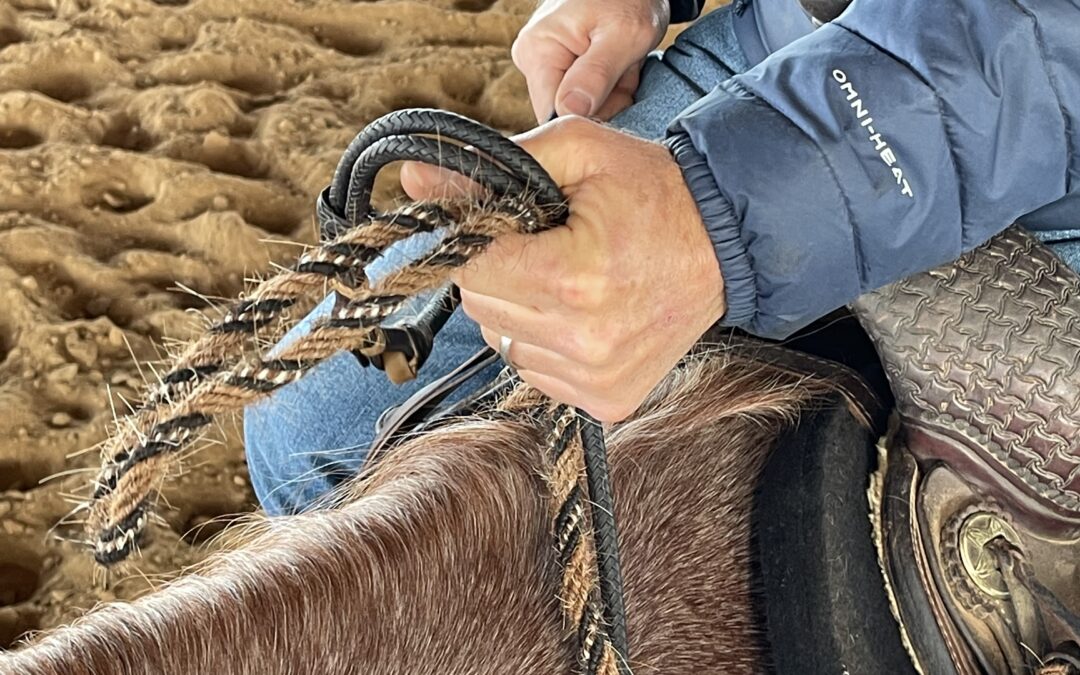
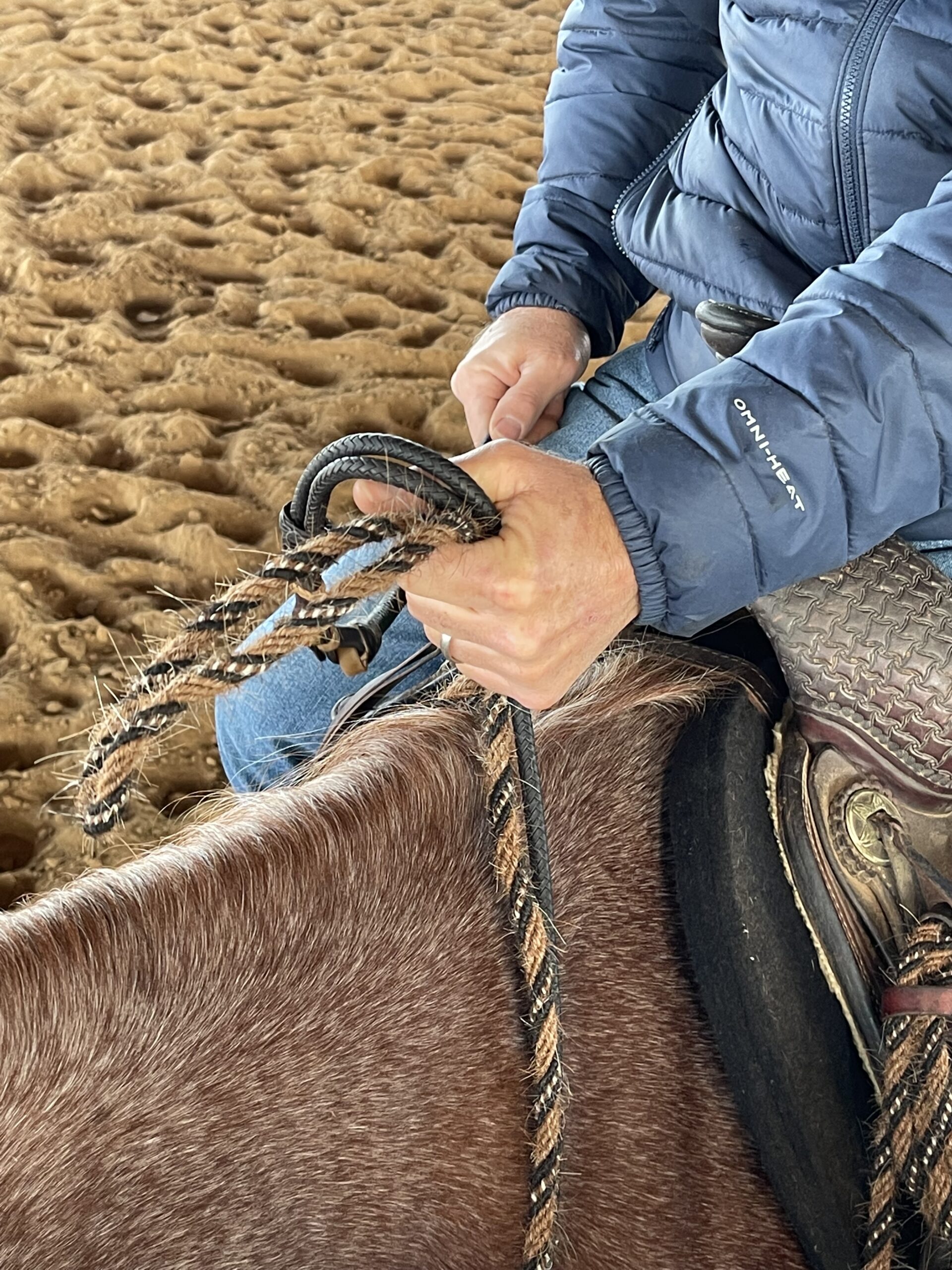
  • The romal should go across the palm and around the thumb or with the thumb on top

  • The hand should be closed into a fist over both reins with no fingers in between, and the thumb must be on top.

  • The rein hand should always be in front of the romal’s knot, where the two reins meet.

  • The free hand must always be to the side (whether left or right), 16 inches from the rein hand or you’re considered to have 2 hands on the reins

  • The reins can be adjusted with the free hand at any time, except in the NRHA reining where the rider may only do so while the horse is completely stopped during the pattern. To adjust while “on the move” in the NRCHA, you pull the reins with your right hand to shorten what’s being held in the left hand

  • In all western classes, romal or the end of the romal – also known as the “popper” – may be straightened or disentangled anytime during the class, provided the rider’s free hand used to straighten or disentangle remains behind the rein hand.

  • Riding in romal reins is different, but with a little practice, I think you’ll enjoy the feel.

LET US KNOW YOUR THOUGHTS 

Holding the 2 Rein

Holding the 2 Rein

I get a lot of questions about how to hold the 2-rein outfit. There are a few different ways, so I’m going to go over each.

The great thing about the year spent in the 2 rein (during which you can also show your horse straight up in the bridle) is that’s it’s legal to put your fingers between the reins! I used to show my horses in both the 2 rein class and the open bridle on the same day so I could school in one and show in the other. 

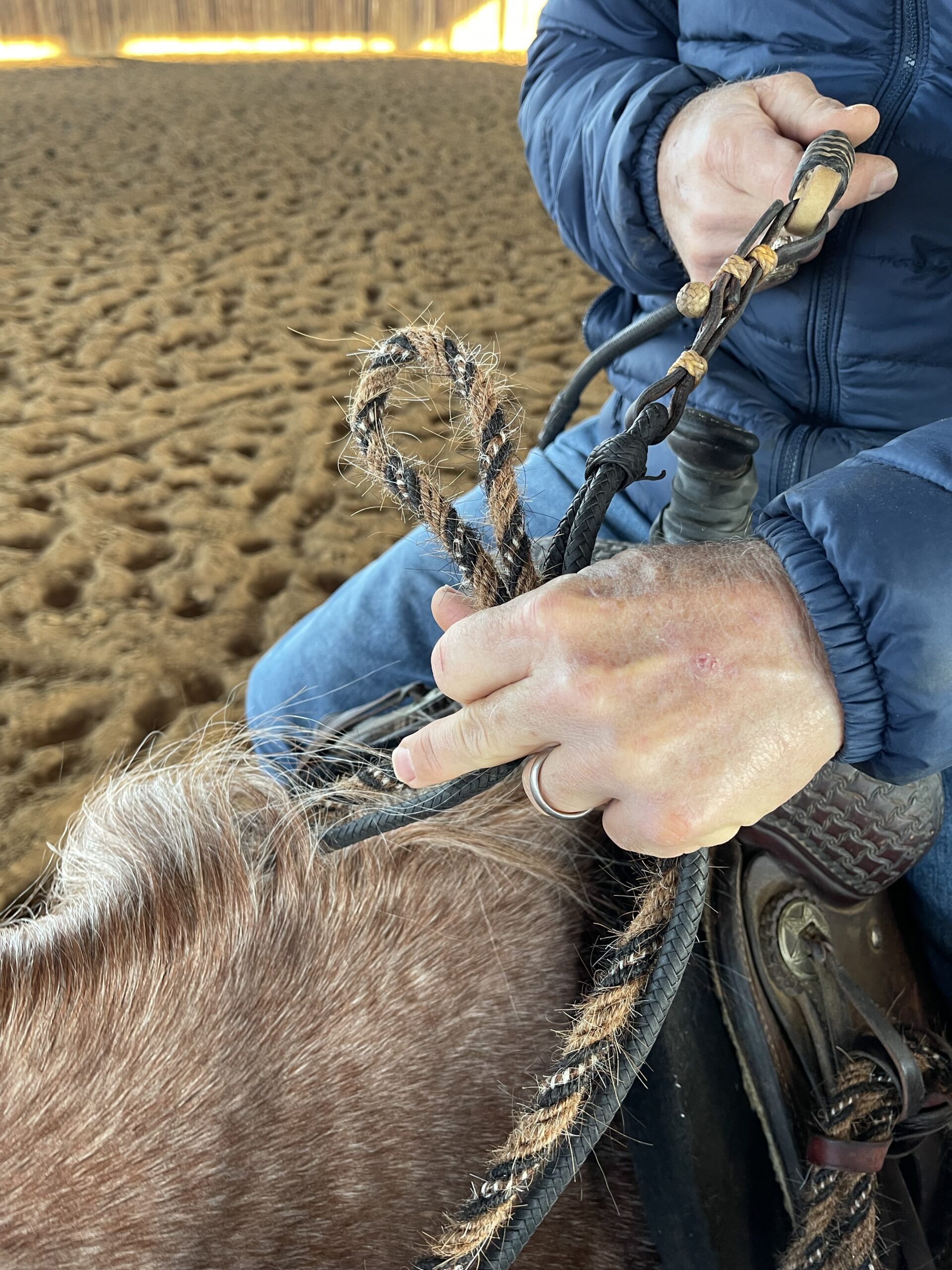
Here’s a photo of the easiest way. In this, you hold everything together in one hand. However, when you do this, you don’t take advantage of using your fingers between the reins. 

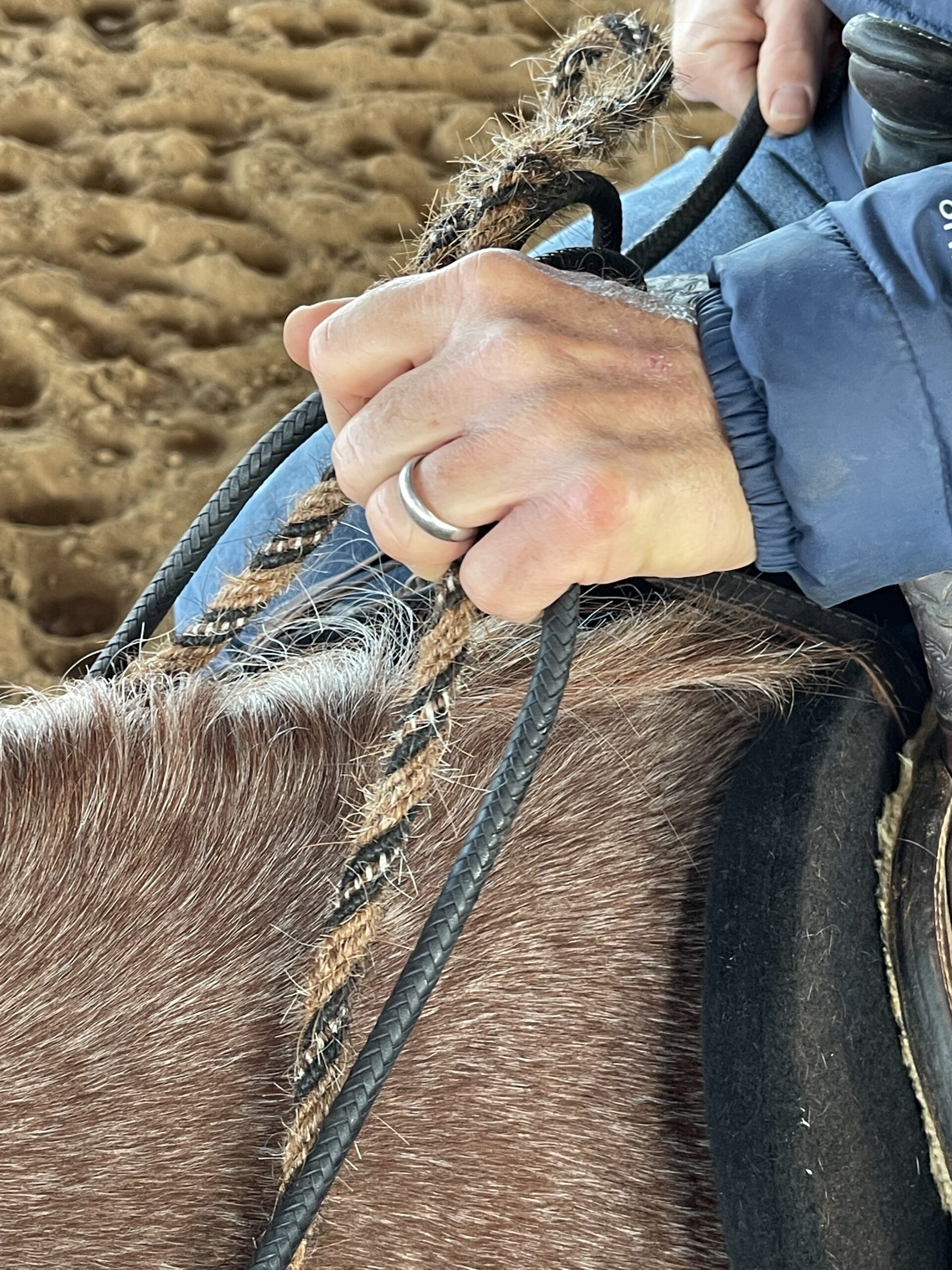
This one is my favorite. You put one finger between each of the 4 reins and then turn your thumb up. 

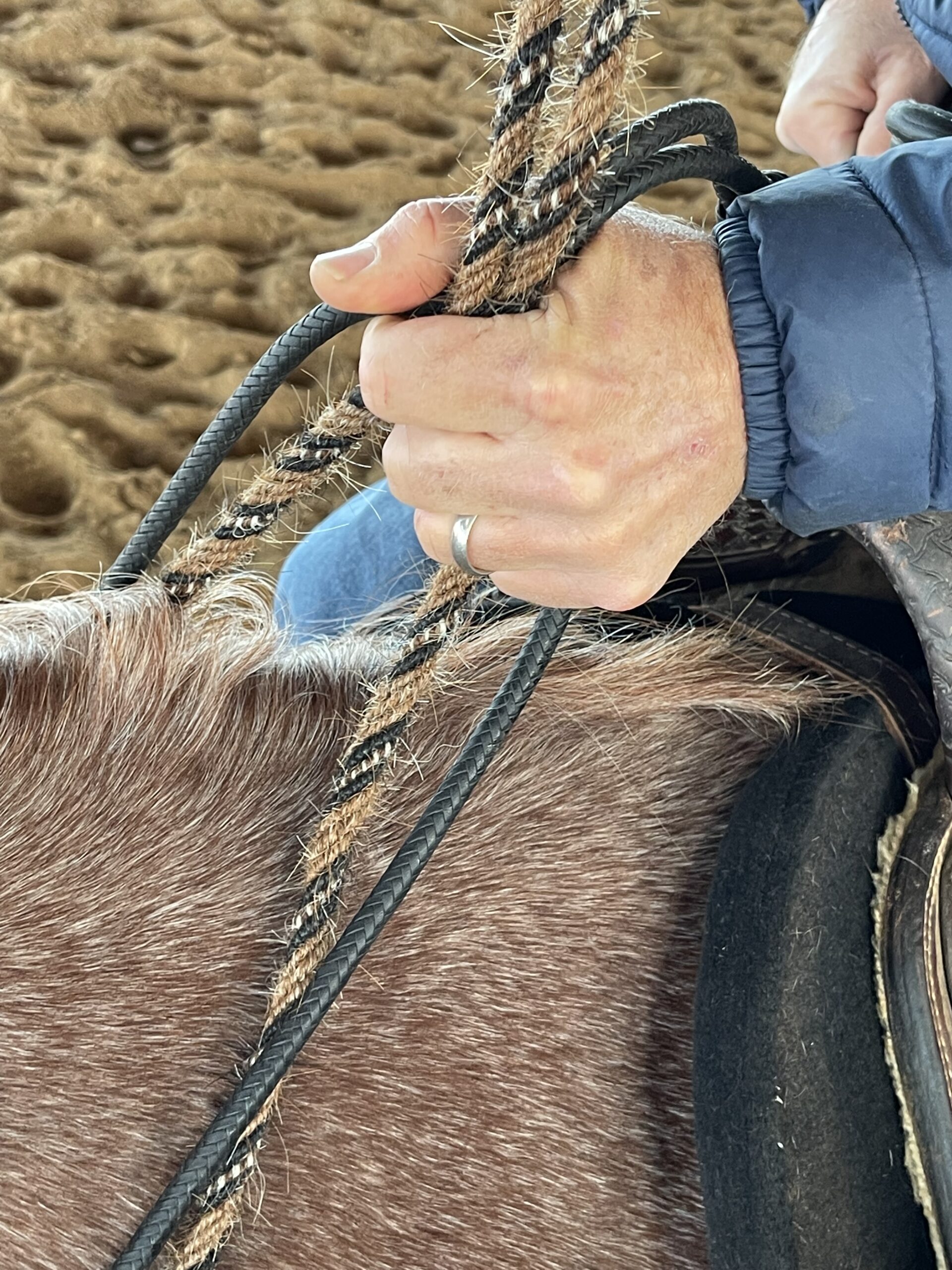
Some folks like to have the romal reins come up through their palm from the bottom up as if you were straight up in the bridle and the mecate reins would be held going from top to bottom. 

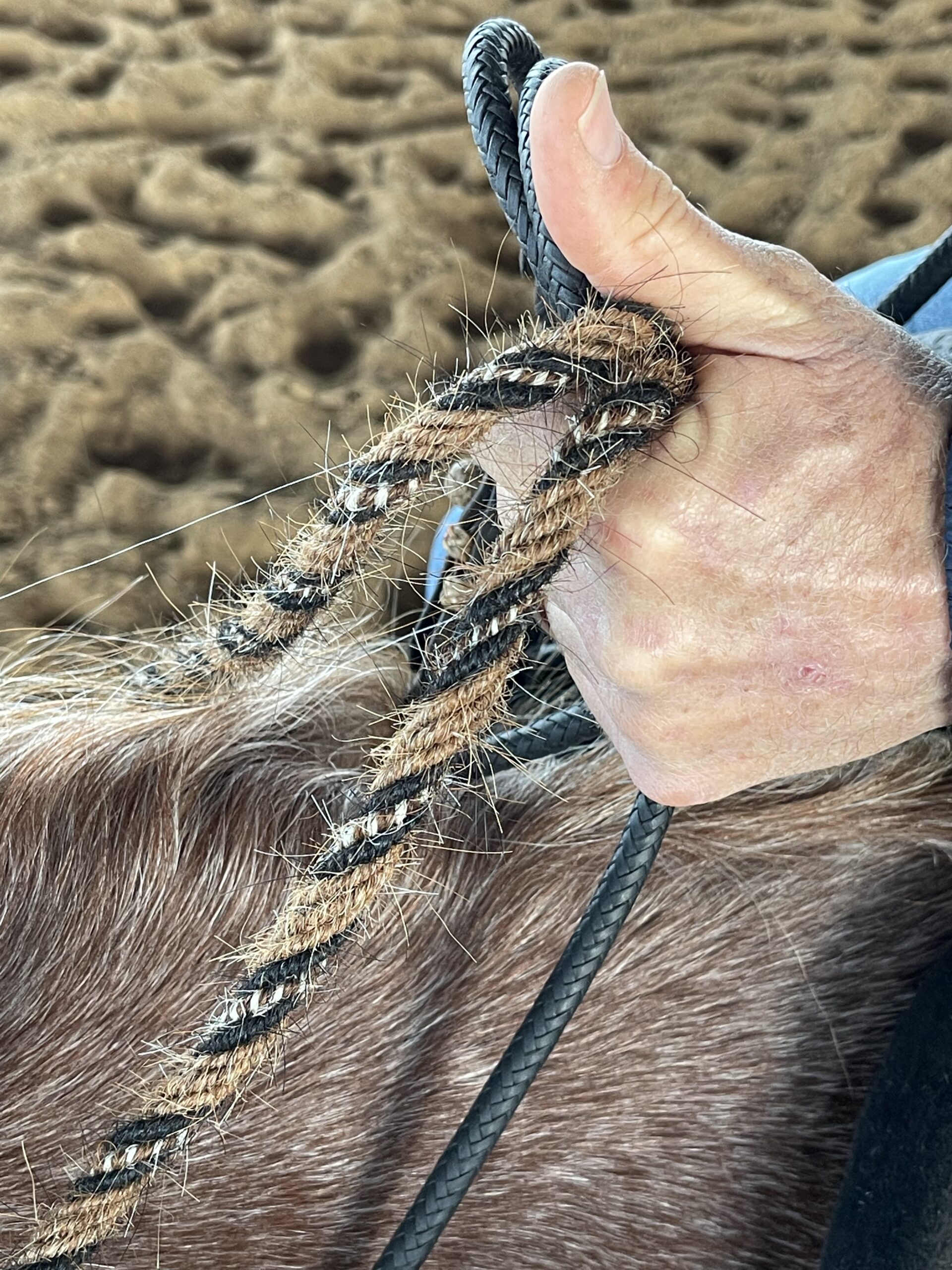
Here’s a photo of putting your fingers in a position to help guide your horse as needed. 

It’s a lot to manage, but hopefully, this is helpful!

LET US KNOW YOUR THOUGHTS 

Two exercises to help spin

Two exercises to help spin

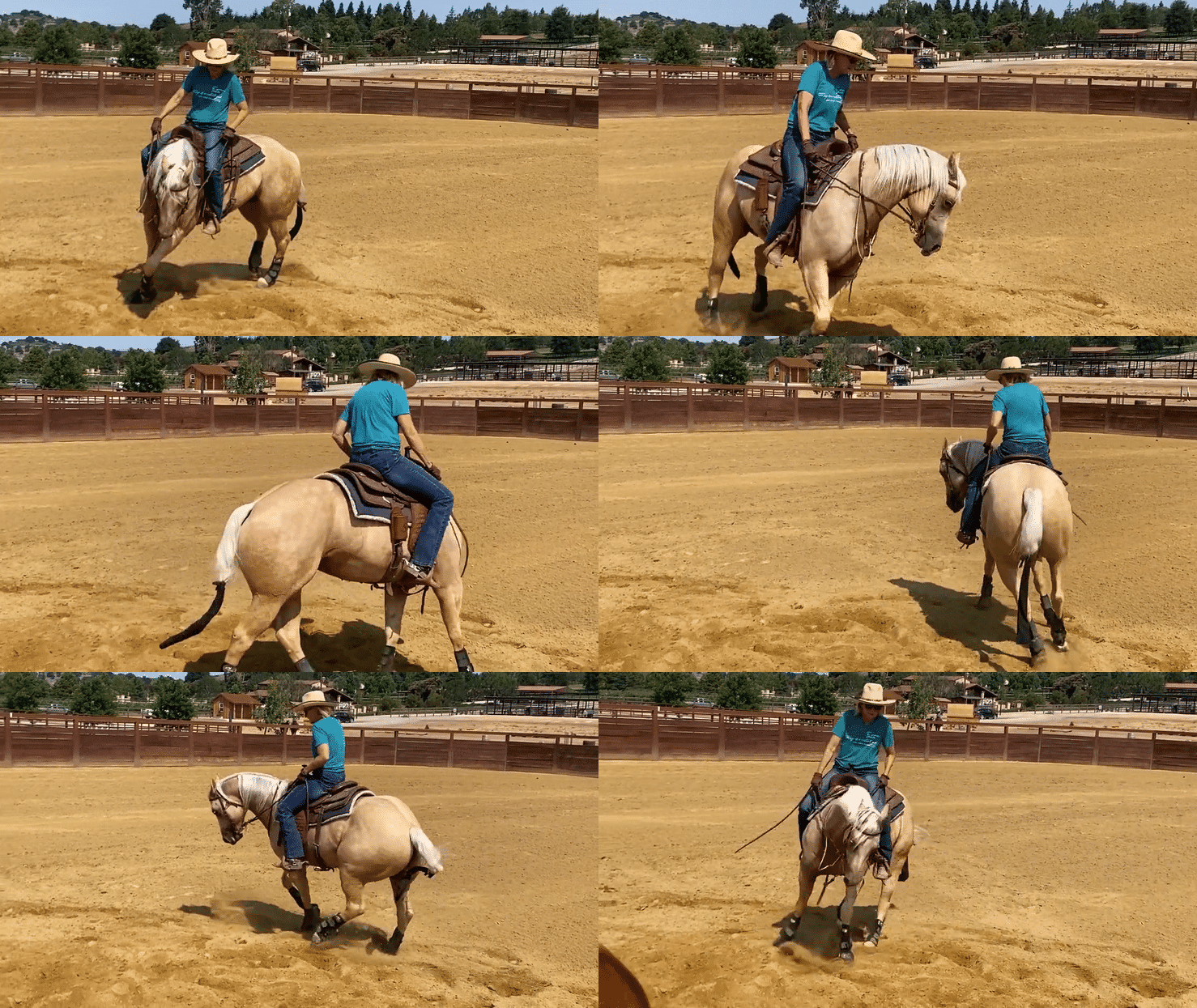
Here are 2 of my favorite ways to tune up a spin other than the fence drill that I’ve posted before.

The first is to build cadence and increase speed.

Start with a bridled up trot in a small circle. Drive your horses hindquarters up underneath them as far as you can. When you have a good cadence on a small circle, softly close your outside rein on his neck and press him with your outside leg. Try to keep the same rhythm, speed and cadence.

I have a metronome in my head going “step-step-step” while I trot and then try to keep that same beat while I spin.

Then come right back up onto the same circle briskly trotting with no loss of cadence.

Then you’re ready go into the spin again for a few beats, then come up trotting. Do this several times then give your horse a rest.

It’s pretty hard work for them, so build into it gradually. Sorry the videos are so short, but I can’t seem to be able to send them from my phone if they’re any longer. I’m open to some techy suggestions though!


The second exercise helps get a horse’s head lower and positions him with a very rounded back and little resistance in the face, he can step around more easily and with more speed and accuracy, 

Bridle him up and drive his hindquarters up underneath him. Spread your hands wide and low evenly on either side of his neck staying forward in your saddle. Hold your reins pretty tight, trapping him, and keeping him relatively straight with just a little bit of nose tipped to the inside of the spin, start bumping him with your outside leg.

That’s really the only cue you’ll use to start the spin. Keep increasing the intensity of your leg bumping until he starts to turn.

Let him catch a rhythm for a few steps, then step right back out on the circle and walk or jog for a bit in the small circle, then try again.  

This exercise usually takes a couple of days to see improvement as your forcing him to turn with his body in a much more collected frame.

It will shorten his wheelbase and get his head dropped down along with less resistance in his face, should make for a cleaner, steppier spin.

LET US KNOW YOUR THOUGHTS 

Are You Excited or Scared?

Are You Excited or Scared?

Sometimes the feelings of being scared and excited can elicit the same physical response in our bodies.

When new challenges and opportunities show up in our riding lives, we may think we are feeling scared when what we really feel is excited. We might not have been taught how to welcome the thrill of a new opportunity, so we back off, feeling anxiety instead of awakening our courage to take on a new challenge.

The butterflies in our stomach or a rapidly beating heart are not necessarily a sign that we are afraid. Those very same feelings can be translated into excitement, curiosity, and passion.

There is nothing wrong with being afraid as long as we do not let it stop us from doing the things that excite us.

Most of us assume that brave people are fearless, but the truth is that they are simply more comfortable with fear because they face it on a regular basis. The more we do this, the more we feel excitement in the face of challenges rather than anxiety. The more we cultivate our ability to move forward instead of backing off, the more we trust ourselves to be able to handle the new opportunity, whether it’s going to a show, riding a colt for the first time or going down the fence.

When we feel our fear, we can remind ourselves that maybe we are actually excited. We can assure ourselves that this opportunity has come our way because we are meant to take it.

Framing things just a little differently can shift our mental state from one of resistance to one of openness. We can practice this new way of seeing things by saying aloud: I am really excited showing this horse for the first time! I am excited to go down the fence! Or, I am excited to have the opportunity to do something I have never done before.

As we do this, we will feel our energy shift from fear, which paralyzes, to excitement, which helps us direct that energy into growing and learning. Soon you’ll find yourself saying, “I can’t wait to go in the show pen and show my horse!”

Try it!

LET US KNOW YOUR THOUGHTS 

One layer at a time

One layer at a time

Training a horse is like painting a car.

You’ve probably seen one of those incredible “show car” paint jobs – where the smooth, rich color looks as if it’s 10 feet deep.

Here’s how that’s done:

After the foundation is perfect, with all the blemishes filled with lead and sanded smooth, the painter applies a primer, which he also sands until it’s perfectly smooth.


Then comes the first color coat. After that’s dry, the painter will sand it until it’s almost entirely gone; just a few molecules of color remain.

Then he applies the second color coat, lets it dry, and sands it until just a blush of color remains.

He’ll do this 20 or more times, building up the color just a few molecules at a time, over a period of many days, until it’s as clear and as deep as an alpine lake.

Well-broke horses are made the same way.

LET US KNOW YOUR THOUGHTS